The White Ship (1941)

- Original title
- La nave bianca
- Directed by
- Francesco De Robertis, Roberto Rossellini
- Genre
- drama film
- Country
- Kingdom of Italy
- Runtime
- 1h 09m
- Rating
- 5.5 of 10 from 14 voters
- Elsewhere
- IMDb

The catalogue in 3D
The film shelves have a room of their own that you can walk around in. The cat behind the counter is the AI Catbot, and they pick real films from the same catalogue when you tell them what you feel like watching. Nothing is for sale, here or in there. Go in from here and this film is already out on the counter, with more like it waiting on the shelf next to it.
How it feels
It follows the crew and wounded soldiers aboard a navy hospital ship in World War II. The story shows daily life, duty, and sacrifice at sea using real sailors as actors.
patrioticdocudramaearnestpropagandisticrestrainedsolemnvisually straightforward
What happens
The White Ship (Italian: La nave bianca) is a 1941 Italian war film directed by Roberto Rossellini. Its cast was made up entirely of amateur actors, many of them the real crew of a hospital ship of the Italian navy. The production was a work of propaganda intended to support the war aims of the Fascist Italian regime during the Second World War. It was made with the close co-operation of the Italian Navy, particularly Francesco De Robertis. Vittorio Mussolini, the son of the Italian dictator, was also a supporter of the project. It was the first feature film directed by Rossellini, and commenced what has been described as his "Fascist Trilogy" which also includes A Pilot Returns (1942) and The Man with a Cross (1943). Along with a number of other films of the era, it is considered a precursor to Italian neorealism. Rossellini went on to be a leading Italian filmmaker, and a major figure in the development of neorealism. The film was screened at the 1941 Venice Film Festival, before going on general release the following year. Because of this 1941 and 1942 are both often cited as its release date. It was awarded the Cup of the National Fascist Party at Venice. (from Wikipedia, CC BY-SA)
More like this
 Rome, Open City (1945)
 A Pilot Returns (1942)
 The Man with a Cross (1943)
 The King of England Will Not Pay (1941)
 Casello n. 3 (1945)
 The Betrothed (1941)
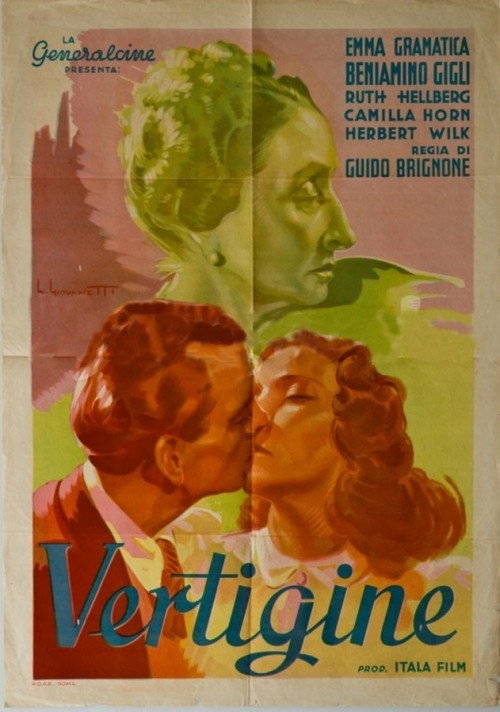 Broken Love (1942)
 The Mask of Cesare Borgia (1941)
- More like this film, on a shelf you can walk up to.It's the lit case on the top shelf.