Pather Panchali (1955)

- Original title
- পথের পাঁচালী
- Directed by
- Satyajit Ray
- Genre
- drama film, coming-of-age film
- Country
- India
- Runtime
- 2h
- Rated
- 12
- Rating
- 7.8 of 10 from 496 voters
- Elsewhere
- IMDb
The catalogue in 3D
The film shelves have a room of their own that you can walk around in. The cat behind the counter is the AI Catbot, and they pick real films from the same catalogue when you tell them what you feel like watching. Nothing is for sale, here or in there. Go in from here and this film is already out on the counter, with more like it waiting on the shelf next to it.
How it feels
A poor family struggles with hardship in rural Bengal. The story follows young Apu and his sister Durga as they experience small joys and deep losses.
slow-burnmelancholictendergroundedobservationalbittersweetintimate
What happens
Pather Panchali (Bengali pronunciation: [pɔtʰer pãtʃali] , transl. Song Of The Little Road) is a 1955 Indian drama film written and directed by Satyajit Ray in his directorial debut. It is an adaptation of Bibhutibhushan Bandyopadhyay's 1929 Bengali novel of the same name. The film stars Subir Banerjee, Kanu Banerjee, Karuna Banerjee, Uma Dasgupta, and Chunibala Devi in leading roles. As the first instalment of The Apu Trilogy, the film depicts the childhood hardships of the protagonist Apu and his elder sister Durga amid the harsh realities of rural poverty. The film is widely acclaimed as a classic of Indian cinema and is regarded as one of the greatest and most influential films in the history of cinema. The film was shot mainly on location, had a limited budget, featured mostly amateur actors, and was made by an inexperienced crew. Lack of funds led to frequent interruptions in production, which took nearly three years, but the West Bengal government pulled Ray out of debt by buying the film for the equivalent of $60,000, which it turned into a profit of $700,000 by 1980. The sitar player Ravi Shankar composed the film's soundtrack and score using classical Indian ragas. Subrata Mitra was in charge of the cinematography while editing was handled by Dulal Dutta. Following its premiere on 3 May 1955 during an exhibition at New York's Museum of Modern Art, Pather Panchali was released in Calcutta the same year to an enthusiastic reception. A special screening was attended by the Chief Minister of West Bengal and the Prime Minister of India. Critics have praised its realism, humanity, and soul-stirring qualities and Subir Banerjee's performance as Apu (which is widely regarded as one of the best child performances in cinema), while detractors called the film's slow pace a drawback. Scholars have commented on the film's lyrical quality and realism (influenced by Italian neorealism), its portrayal of the poverty and small delights of daily life, and the use of what the author Darius Cooper has termed the "epiphany of wonder", among other themes. The tale of Apu's life is continued in the two subsequent installments of Ray's trilogy: Aparajito (The Unvanquished, 1956) and Apur Sansar (The World of Apu, 1959). Pather Panchali is described as a turning point in Indian cinema, as it was among the films that helped pioneer the parallel cinema movement, which espoused authenticity and social realism. The first film from independent India to attract major international critical attention, it won India's National Film Award for Best Feature Film in 1955, the Best Human Document award at the 1956 Cannes Film Festival, and several other awards, establishing Ray as one of the country's most distinguished filmmakers. It is often featured in lists of the greatest films ever made. (from Wikipedia, CC BY-SA)
More like this
 Aparajito (1956)
 Apur Sansar (1959)
 Naata (1955)
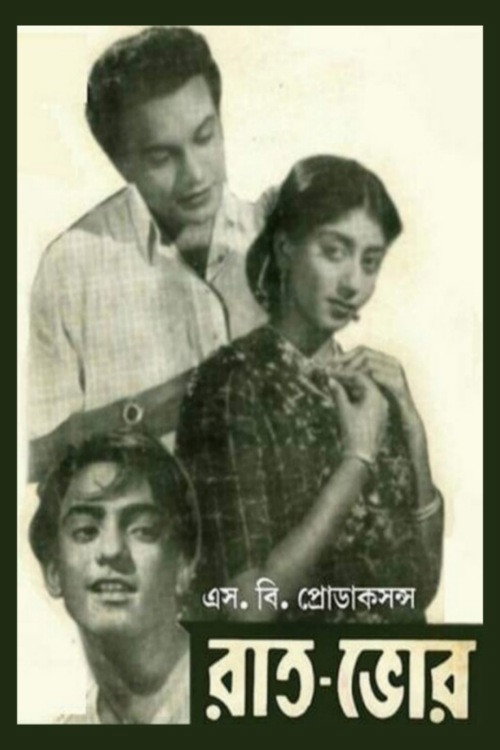 Raat Bhore (1955)
 Upahar (1955)
 Menaka (1955)
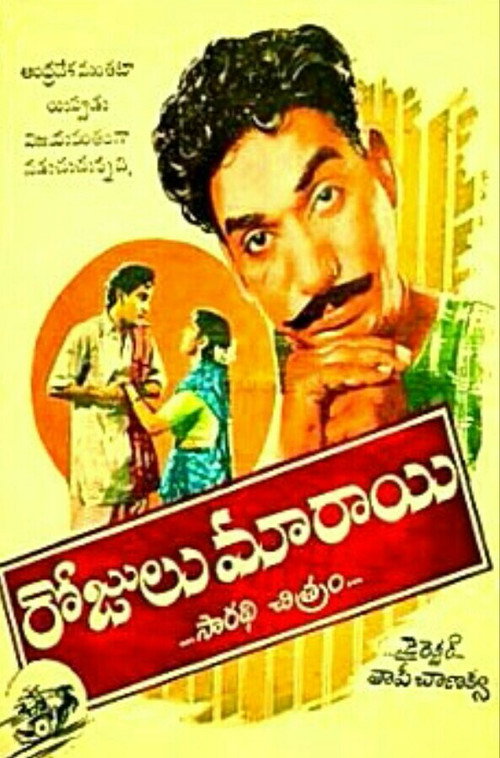 Rojulu Marayi (1955)
 Kumari Mon (1962)
- More like this film, on a shelf you can walk up to.It's the lit case on the top shelf.