Samurai III: Duel at Ganryu Island (1956)
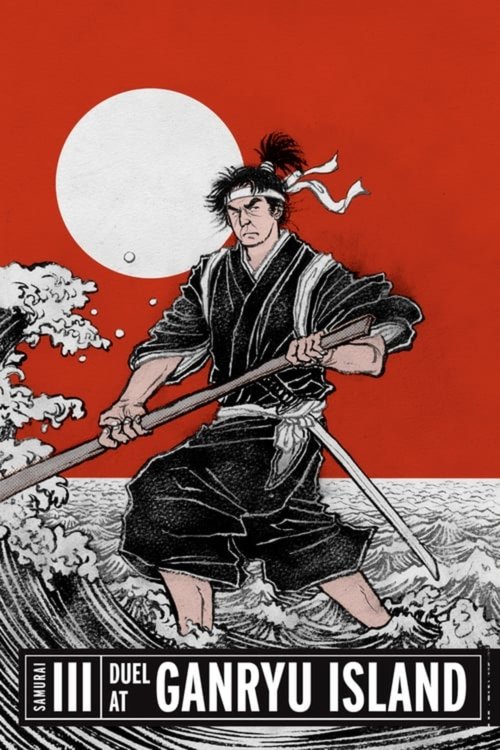
- Original title
- 宮本武蔵完結編 決闘巌流島
- Directed by
- Hiroshi Inagaki
- Genre
- drama film, action film, adventure film, biographical film, Jidaigeki, historical film
- Country
- Japan
- Runtime
- 1h 45m
- Rated
- U
- Rating
- 7.2 of 10 from 140 voters
- Elsewhere
- IMDb
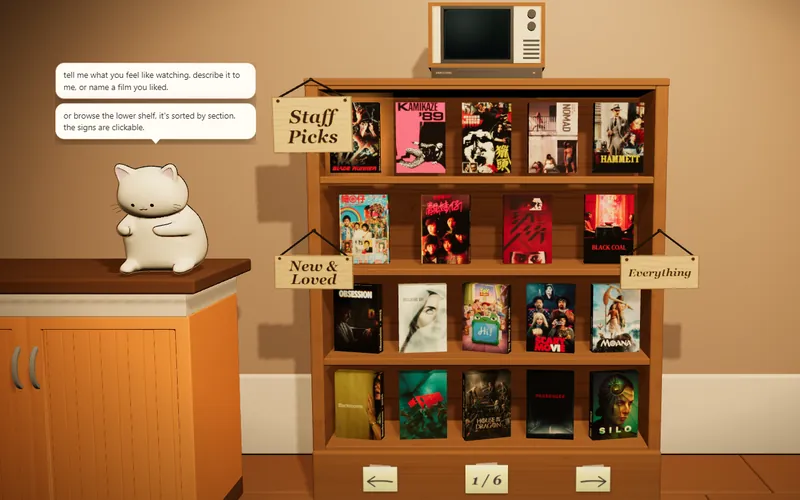
The catalogue in 3D
The film shelves have a room of their own that you can walk around in. The cat behind the counter is the AI Catbot, and they pick real films from the same catalogue when you tell them what you feel like watching. Nothing is for sale, here or in there. Go in from here and this film is already out on the counter, with more like it waiting on the shelf next to it.
How it feels
The film follows the famed swordsman Miyamoto Musashi as he prepares for his legendary final duel with his rival Sasaki Kojiro. It shows his journey through landscapes and encounters that test his discipline and skill. The story ends with their climactic fight on a beach.
epicstatelyfatefulmeditativesolemnvisually strikingconfrontationalcontrolledresolute
What happens
Samurai III: Duel at Ganryu Island (Japanese: 宮本武蔵完結編 決闘巌流島, Hepburn: Miyamoto Musashi Kanketsuhen: Kettō Ganryūjima) is a 1956 Japanese film directed by Hiroshi Inagaki and starring Toshirō Mifune. Shot in Eastmancolor, it is the third and final film of Inagaki's Samurai Trilogy. The film is adapted from Eiji Yoshikawa's novel Musashi, originally released as a serial in the Japanese newspaper Asahi Shimbun, between 1935 and 1939. The novel is loosely based on the life of the famous Japanese swordsman, Miyamoto Musashi. The preceding two parts of the trilogy are Samurai I: Musashi Miyamoto (1954) and Samurai II: Duel at Ichijoji Temple (1955). (from Wikipedia, CC BY-SA)
More like this
 Miyamoto Musashi (1961)
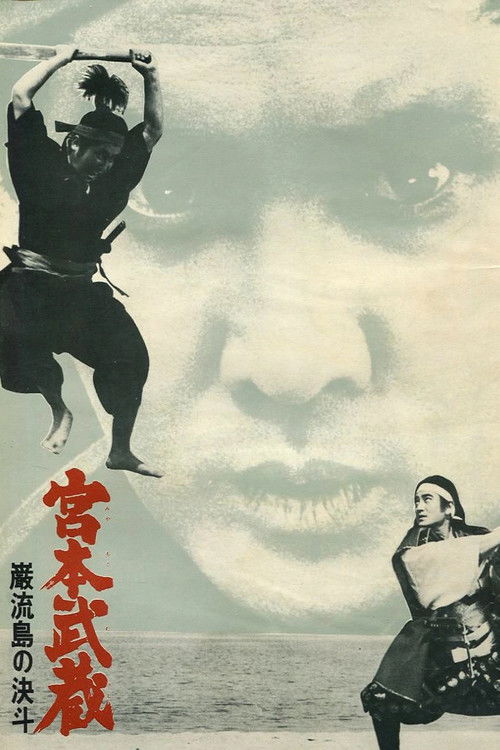 Miyamoto Musashi : Ganryūjima no kettō (1965)
 Miyamoto Musashi : Nitōryū kaigen (1963)
 Miyamoto Musashi : Hannyazaka no kettō (1962)
 Seven Samurai (1954)
 Yagyū Ren'yasai: Hiden Tsukikage-shō (1956)
 Miyamoto Musashi : Ichijōji no kettō (1964)
 Matashirō Fighting Journey (1956)
- More like this film, on a shelf you can walk up to.It's the lit case on the top shelf.