The Ten Commandments (1956)

- Directed by
- Cecil B. DeMille
- Genre
- drama film, adventure film, sword-and-sandal film, historical film
- Country
- United States
- Runtime
- 3h 40m
- Rated
- G
- Rating
- 7.8 of 10 from 1,886 voters
- Elsewhere
- IMDb

The catalogue in 3D
The film shelves have a room of their own that you can walk around in. The cat behind the counter is the AI Catbot, and they pick real films from the same catalogue when you tell them what you feel like watching. Nothing is for sale, here or in there. Go in from here and this film is already out on the counter, with more like it waiting on the shelf next to it.
How it feels
An adopted Egyptian prince learns he is Hebrew and leads the enslaved Israelites out of Egypt. He receives the Ten Commandments from God at Mount Sinai.
epicsolemngrandiosedramaticstatelybiblicalawe-inspiring
What happens
The Ten Commandments is a 1956 American epic biblical adventure drama film produced, directed, and narrated by Cecil B. DeMille, shot in VistaVision (color by Technicolor), and released by Paramount Pictures. Based on the Bible's Book of Exodus and other sources, it dramatizes the story of the life of Moses, an adopted Egyptian prince who becomes the deliverer of his real brethren, the enslaved Hebrews, and thereafter leads the Exodus to Mount Sinai, where he receives the titular commandments from God. The film stars Charlton Heston in the lead role, Yul Brynner as Rameses, Anne Baxter as Nefretiri, Edward G. Robinson as Dathan, Yvonne De Carlo as Sephora, Debra Paget as Lilia, and John Derek as Joshua; and features Sir Cedric Hardwicke as Sethi I, Nina Foch as Bithiah, Martha Scott as Yochabel, Judith Anderson as Memnet, and Vincent Price as Baka, among others. First announced in 1952, The Ten Commandments is a remake of the prologue of DeMille's 1923 silent film of the same title. Four screenwriters, three art directors, and five costume designers worked on the film. In 1954, it was filmed on location in Egypt, Mount Sinai, and the Sinai Peninsula, featuring one of the largest exterior sets ever created for a motion picture. In 1955, the interior sets were constructed on Paramount's Hollywood soundstages. The original roadshow version included an onscreen introduction by DeMille and was released to cinemas in the United States on November 8, 1956, and, at the time of its release, was the most expensive film ever made. It was DeMille's most successful work, his first widescreen film, his fourth biblical production, and his final directorial effort before his death in 1959. In 1957, the film was nominated for seven Academy Awards, including Best Picture, winning the Academy Award for Best Visual Effects (John P. Fulton, A.S.C.). DeMille won the Foreign Language Press Film Critics Circle Award for Best Director. Charlton Heston was nominated for a Golden Globe Award for Best Performance by an Actor in a Motion Picture (Drama). Yul Brynner won the National Board of Review Award for Best Actor. Heston, Anne Baxter, and Yvonne De Carlo won Laurel Awards for Best Dramatic Actor, 5th Best Dramatic Actress, and 3rd Best Supporting Actress, respectively. It is also one of the most financially successful films ever made, grossing approximately $122.7 million at the box office during its initial release; it was the most successful film of 1956 and the second-highest-grossing film of the decade. According to Guinness World Records, in terms of theatrical exhibition, it is the eighth most successful film of all-time when the box office gross is adjusted for inflation. In 1999, the film was selected for preservation in the United States National Film Registry by the Library of Congress as being "culturally, historically, or aesthetically significant". In June 2008, the American Film Institute revealed its "Ten Top Ten"—the best ten films in ten American film genres—after polling over 1,500 people from the creative community. The film was listed as the tenth best film in the epic genre. The film has aired annually on U.S. network television in prime time during the Passover/Easter season since 1973. (from Wikipedia, CC BY-SA)
More like this
 The Prince of Egypt (1998)
 Ben-Hur (1959)
 The Ten Commandments (1923)
 Moses the Lawgiver (1974)
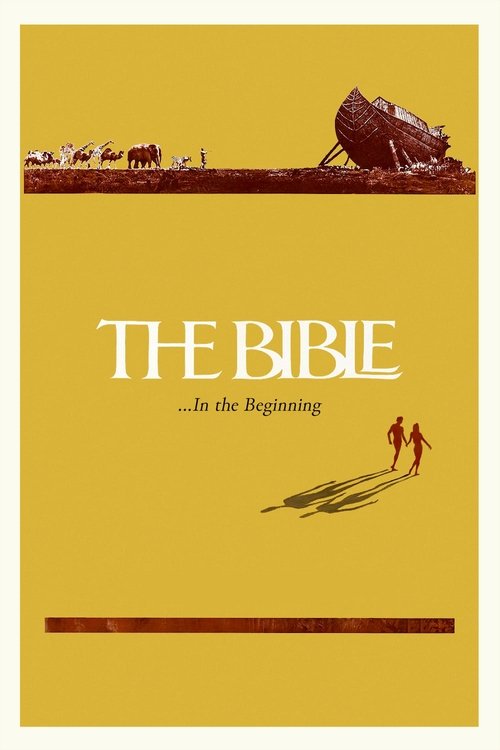 The Bible: In the Beginning... (1966)
 Ben-Hur: A Tale of the Christ (1925)
 The Passion of the Christ (2004)
 King of Kings (1961)
- More like this film, on a shelf you can walk up to.It's the lit case on the top shelf.