Testament of Orpheus (1960)
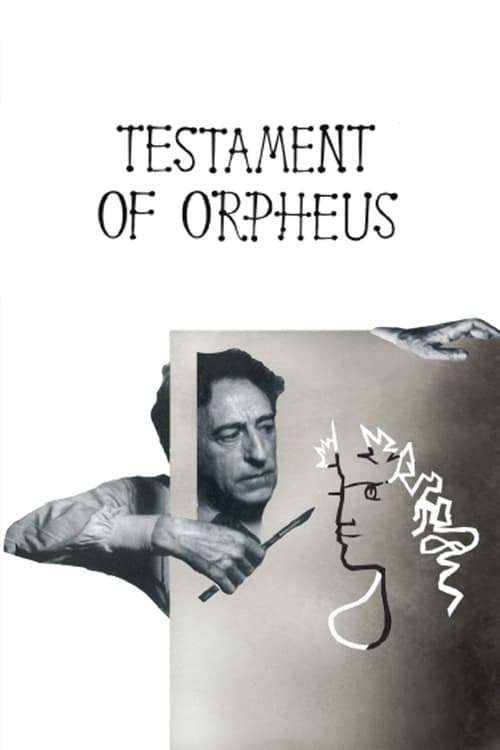
- Original title
- Le Testament d'Orphée
- Directed by
- Jean Cocteau
- Genre
- drama film, fantasy film
- Country
- France
- Runtime
- 1h 21m
- Rating
- 7.6 of 10 from 129 voters
- Elsewhere
- IMDb
The catalogue in 3D
The film shelves have a room of their own that you can walk around in. The cat behind the counter is the AI Catbot, and they pick real films from the same catalogue when you tell them what you feel like watching. Nothing is for sale, here or in there. Go in from here and this film is already out on the counter, with more like it waiting on the shelf next to it.
How it feels
Jean Cocteau plays himself as an 18th century poet traveling through a surreal mythological landscape. The film is a poetic self-portrait featuring cameos from artists like Pablo Picasso and actors like Yul Brynner.
dreamlikesurrealself-reflexivewhimsicalmeditativevisually poeticplayfulabstract
What happens
Testament of Orpheus (French: Le testament d'Orphée) is a 1960 black-and-white film with a few seconds of color film spliced into it. Directed by and starring Jean Cocteau, who plays himself as an 18th-century poet, the film includes cameo appearances by Pablo Picasso, Jean Marais, Charles Aznavour, Jean-Pierre Leaud, and Yul Brynner. It is considered the final part of The Orphic Trilogy, following The Blood of a Poet (1930) and Orphée (1950). One critic described it as a "wry, self-conscious re-examination of a lifetime's obsessions" with Cocteau placing himself at the center of the mythological and fictional world he spun throughout his books, films, plays and paintings. The film includes numerous instances of "double takes", including one scene where Cocteau, walking past himself, looks back to see himself in what was described by one scholar as "a retrospective on the Cocteau œuvre". The New York Times called it "self-serving", noting that the pretension of the film was certainly intended by Cocteau as his last statement made on film: "as much a long-winded self-analysis as an extraordinary succession of visually arresting images". Picasso had introduced Cocteau to the photographer Lucien Clergue who was brought in to photo-document the film's production. His black-and-white stills were published in 2001 as Jean Cocteau and The Testament of Orpheus. (from Wikipedia, CC BY-SA)
More like this
 La Villa Santo-Sospir (1952)
 8½ (1963)
 Les Enfants Terribles (1950)
 Orpheus (1950)
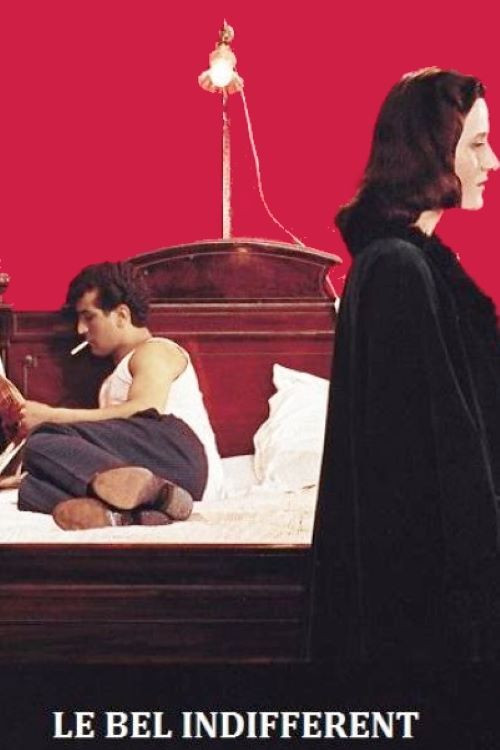 Le bel indifférent (1957)
 Line of Sight (1960)
 Cocteau et compagnie (2003)
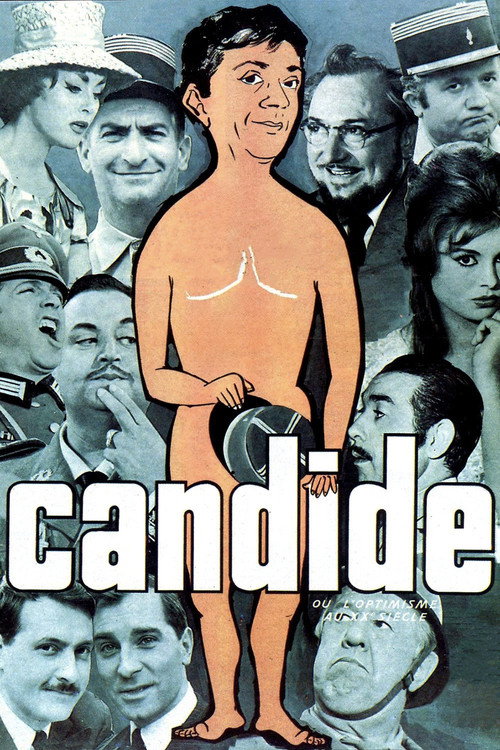 Candide, or the Optimist of the Twentieth Century (1960)
- More like this film, on a shelf you can walk up to.It's the lit case on the top shelf.