The Two Gladiators (1964)

- Original title
- I due gladiatori
- Directed by
- Mario Caiano
- Genre
- sword-and-sandal film
- Country
- Italy
- Runtime
- 1h 30m
- Rated
- 12
- Rating
- 5.5 of 10 from 15 voters
- Elsewhere
- IMDb

The catalogue in 3D
The film shelves have a room of their own that you can walk around in. The cat behind the counter is the AI Catbot, and they pick real films from the same catalogue when you tell them what you feel like watching. Nothing is for sale, here or in there. Go in from here and this film is already out on the counter, with more like it waiting on the shelf next to it.
How it feels
In ancient Rome, Emperor Marcus Aurelius has twin sons. One is raised as the heir while the other is secretly spared from death and raised by a foster family. Years later, the twin brother Lucius is used in a plot against Emperor Commodus, leading to a deadly clash between the brothers in a gladiator fight.
dramatictensetragicaction-packedhistoricalmelodramaticbrooding
What happens
The Two Gladiators (Italian: I due gladiatori, also known as Fight or Die) is a 1964 Italian peplum film directed by Mario Caiano and starring Richard Harrison. In the film, the Roman Emperor Marcus Aurelius fathered twin sons. It is decided that one son will become Aurelius' heir, while the other will be killed to avoid a potential succession crisis between two rival heirs. The senator tasked with infanticide has moral reservations against the practice, and he instead offers the infant to a foster family. Several years later, Commodus succeeds his father. The senator tries to use Commodus' estranged twin brother Lucius Crassus as a candidate for the throne. The two brothers are soon scheming against each other, in a conflict that ends in fratricide during gladiatorial combat. (from Wikipedia, CC BY-SA)
More like this
 The Fall of the Roman Empire (1964)
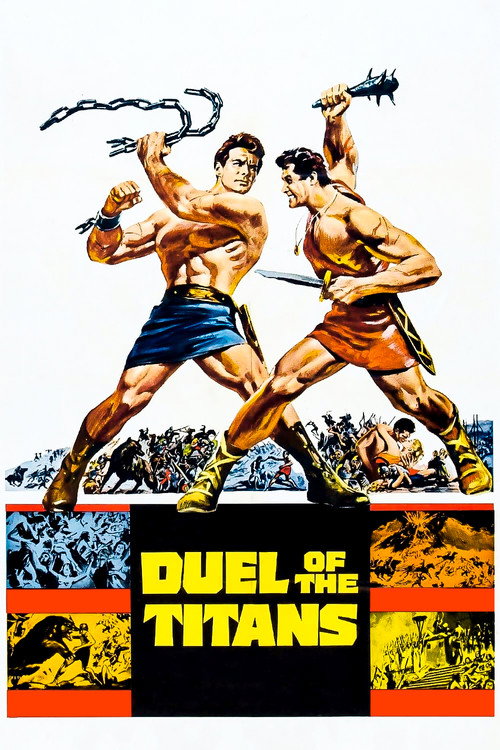 Duel of the Titans (1961)
 Revolt of the Praetorians (1964)
 Thunder of Battle (1964)
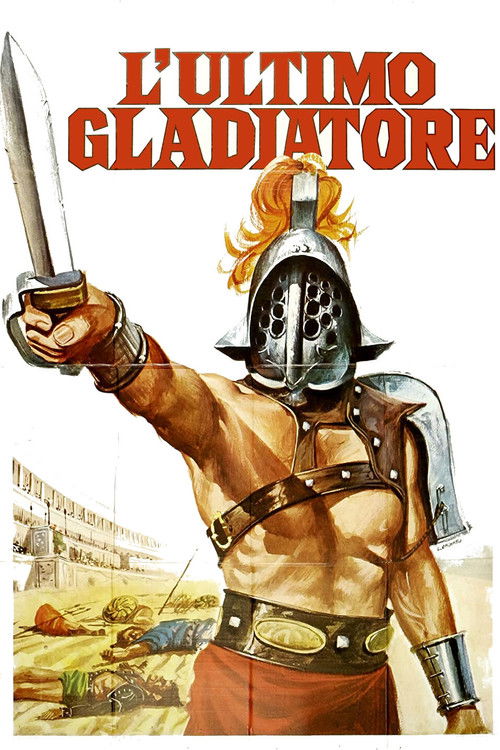 Messalina vs. the Son of Hercules (1964)
 Gladiator (2000)
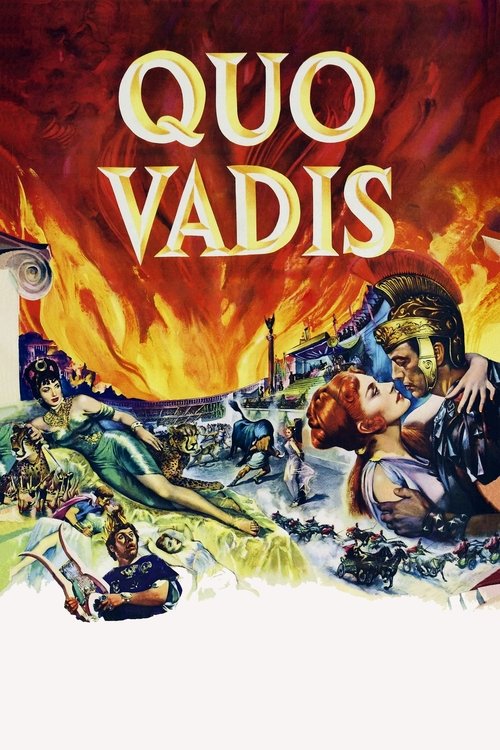 Quo Vadis (1951)
 Spartacus and the Ten Gladiators (1964)
- More like this film, on a shelf you can walk up to.It's the lit case on the top shelf.