Is Paris Burning? (1966)

- Original title
- Paris brûle-t-il?
- Directed by
- René Clément
- Genre
- drama film, war film
- Country
- France, United States
- Runtime
- 2h 55m
- Rated
- PG
- Rating
- 7.2 of 10 from 227 voters
- Elsewhere
- IMDb
The catalogue in 3D
The film shelves have a room of their own that you can walk around in. The cat behind the counter is the AI Catbot, and they pick real films from the same catalogue when you tell them what you feel like watching. Nothing is for sale, here or in there. Go in from here and this film is already out on the counter, with more like it waiting on the shelf next to it.
How it feels
During World War II, the French Resistance and Free French forces fight to liberate Paris from German occupation in August 1944. The film follows a large ensemble of characters from both sides as they struggle to save the city from destruction.
epichistoricaltensepatrioticsomberlarge-scaleearnestblack-and-white
What happens
Is Paris Burning? (French: Paris brûle-t-il ?) is a 1966 black-and-white epic war film about the liberation of Paris in August 1944 by the French Resistance and the Free French Forces during World War II. A French-American co-production, it was directed by French filmmaker René Clément, with a screenplay by Gore Vidal, Francis Ford Coppola, Jean Aurenche, Pierre Bost and Claude Brulé, adapted from the 1965 book of the same title by Larry Collins and Dominique Lapierre. The film stars an international ensemble cast that includes French (Jean-Paul Belmondo, Alain Delon, Bruno Cremer, Pierre Vaneck, Jean-Pierre Cassel, Leslie Caron, Charles Boyer, Yves Montand), American (Orson Welles, Kirk Douglas, Glenn Ford, Robert Stack, Anthony Perkins, George Chakiris) and German (Gert Fröbe, Hannes Messemer, Ernst Fritz Fürbringer, Harry Meyen, Wolfgang Preiss) stars. The film was released in France on October 26, 1966, and in the United States on November 10, 1966. It received generally positive reviews, and was the fourth-most-popular film of the year in France for 1966. It was nominated for Best Cinematography (Black and White) and Academy Award for Best Art Direction at the 40th Academy Awards and a Golden Globe Award for Best Original Score. (from Wikipedia, CC BY-SA)
More like this
 La Longue marche (1966)
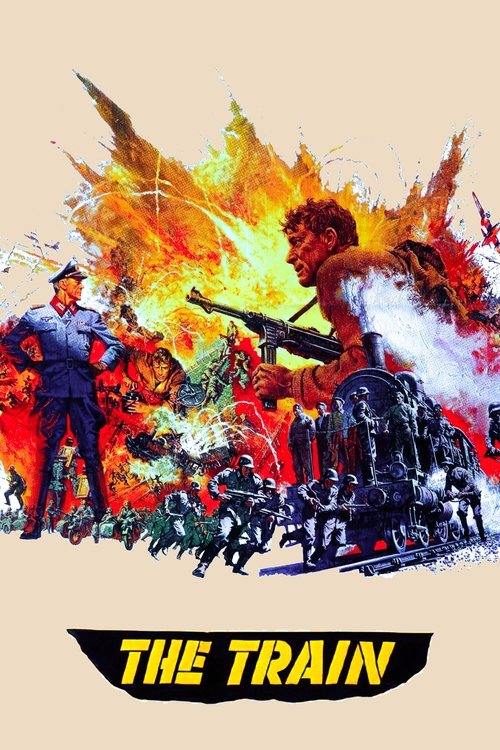 The Train (1964)
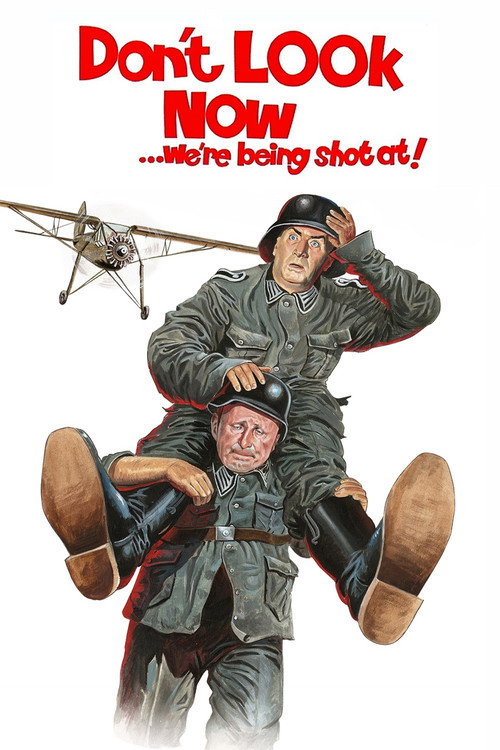 La Grande Vadrouille (1966)
 Line of Demarcation (1966)
 Army of Shadows (1969)
 Jéricho (1946)
 Shock Troops (1967)
 The Cat Shows Her Claws (1960)
- More like this film, on a shelf you can walk up to.It's the lit case on the top shelf.