Waterloo (1970)

- Directed by
- Sergei Bondarchuk
- Genre
- drama film, war film, biographical film, historical drama
- Country
- Soviet Union, Italy
- Runtime
- 2h 14m
- Rated
- 12
- Rating
- 7.1 of 10 from 228 voters
- Elsewhere
- IMDb

The catalogue in 3D
The film shelves have a room of their own that you can walk around in. The cat behind the counter is the AI Catbot, and they pick real films from the same catalogue when you tell them what you feel like watching. Nothing is for sale, here or in there. Go in from here and this film is already out on the counter, with more like it waiting on the shelf next to it.
How it feels
This film depicts the Battle of Waterloo and the Hundred Days campaign leading up to it. It follows Napoleon Bonaparte and the Duke of Wellington as they command their armies, and also shows other leaders and soldiers on both sides.
epicgrand-scaleneutralhistoricaldramaticmethodicalsombervisually-spectacular
What happens
Waterloo (Russian: Ватерлоо) is a 1970 English-language epic historical drama film about the Battle of Waterloo, the decisive battle of the Napoleonic Wars. A co-production between Italy and the Soviet Union, it was directed by Sergei Bondarchuk and produced by Dino De Laurentiis. It stars Rod Steiger as Napoleon Bonaparte and Christopher Plummer as the Duke of Wellington. Other stars include Jack Hawkins as General Sir Thomas Picton, Virginia McKenna as the Duchess of Richmond, Dan O'Herlihy as Marshal Ney, and Orson Welles as Louis XVIII of France. The film is centered not just on the Battle of Waterloo, but also on the days that led to the campaign known as the Hundred Days. Steiger and Plummer often narrate sections in voice-over, presenting thoughts of Napoleon and Wellington. The film takes a largely neutral stance and portrays many individual leaders and soldiers on each side, rather than simply focusing on Wellington and Napoleon. It creates a generally accurate chronology of the events of the battle, the extreme heroism on each side, and the loss of life suffered by all the participating armies. The film is most famous for its lavish battle scenes, shot on-location in Uzhhorod, Ukraine. Its 17,000 authentically dressed extras, recreating battle scenes with true numbers and without special effects, remain the largest body of costumed extras in any film. Despite mixed critical reviews, it won several awards, including BAFTAs for Best Costume Design and Best Art Direction, and the 1971 David di Donatello for Best Film. (from Wikipedia, CC BY-SA)
More like this
 Hundred Days (1935)
 Napoléon (1927)
 Austerlitz (1960)
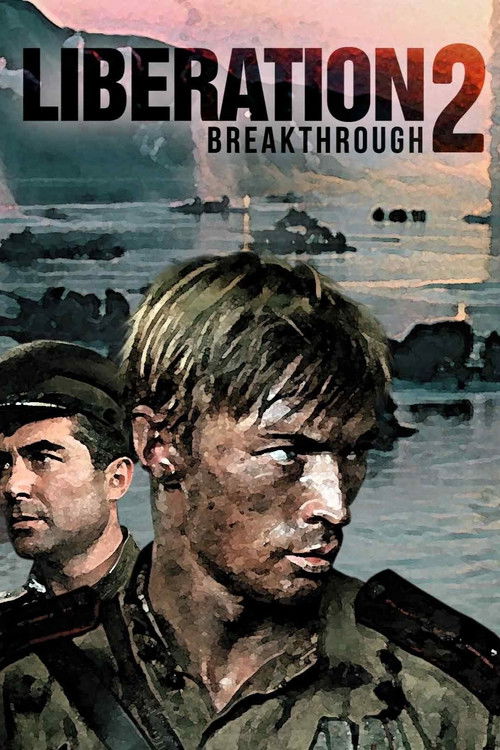 Liberation: Breakthrough (1970)
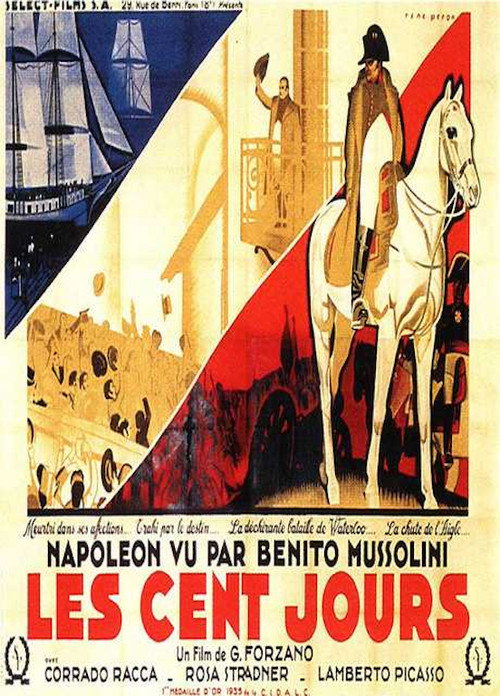 Campo di Maggio (1935)
 The Adventures of Gerard (1970)
 War and Peace (1965)
 The Duellists (1977)
- More like this film, on a shelf you can walk up to.It's the lit case on the top shelf.