A Clockwork Orange (1971)

- Directed by
- Stanley Kubrick
- Genre
- drama film, action film, science fiction film, comedy drama, prison film, mystery film
- Country
- United Kingdom, United States
- Runtime
- 2h 16m
- Rated
- NC-17
- Rating
- 8.2 of 10 from 13,916 voters
- Elsewhere
- IMDb
The catalogue in 3D
The film shelves have a room of their own that you can walk around in. The cat behind the counter is the AI Catbot, and they pick real films from the same catalogue when you tell them what you feel like watching. Nothing is for sale, here or in there. Go in from here and this film is already out on the counter, with more like it waiting on the shelf next to it.
How it feels
A charismatic teenage gang leader commits brutal acts of violence and rape with his friends in a dystopian near-future Britain. After he is caught, the government subjects him to an experimental psychological conditioning technique meant to cure his criminal behavior.
disturbingunsettlingdarkly comictensecoldprovocativestylizedbleak
What happens
A Clockwork Orange is a 1971 dystopian crime film written, produced, and directed by Stanley Kubrick. It is based on Anthony Burgess's 1962 novel. The film employs disturbing and violent themes to comment on psychiatry, juvenile delinquency, youth gangs, and broader social, political, and economic issues in a dystopian near-future Britain. Alex (Malcolm McDowell), the central character, is a charismatic, anti-social delinquent whose interests include classical music (especially that of Beethoven), committing rape, theft, and "ultra-violence". He leads a small gang of thugs, Pete (Michael Tarn), Georgie (James Marcus), and Dim (Warren Clarke), whom he calls his droogs (from the Russian word друг, which is "friend", "buddy"). The film chronicles the horrific crime spree of his gang, his capture, and attempted rehabilitation via an experimental psychological conditioning technique (the "Ludovico Technique") promoted by the Minister of the Interior (Anthony Sharp). Alex narrates most of the film in Nadsat, a fractured adolescent slang composed of Slavic languages (especially Russian), English, and Cockney rhyming slang. The film premiered in New York City on 19 December 1971 and was released in the United Kingdom on 13 January 1972. The film was met with polarised reviews from critics and was controversial due to its depictions of graphic violence. After it was cited as having inspired copycat acts of violence, the film was withdrawn from British cinemas at Kubrick's behest, and it was also banned in several other countries. In the years following, the film underwent a critical re-evaluation and earned a cult following. It received several awards and nominations, with four nominations at the 44th Academy Awards, including Best Picture. In the British Film Institute's 2012 Sight & Sound polls of the world's greatest films, A Clockwork Orange was ranked 75th in the directors' poll and 235th in the critics' poll. In 2020, the film was selected for preservation in the United States National Film Registry by the Library of Congress as being "culturally, historically, or aesthetically significant". (from Wikipedia, CC BY-SA)
More like this
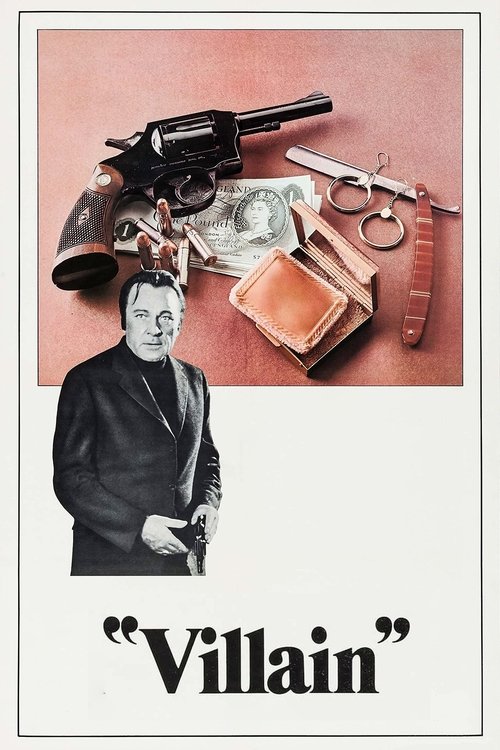 Villain (1971)
 Get Carter (1971)
 Die Screaming, Marianne (1971)
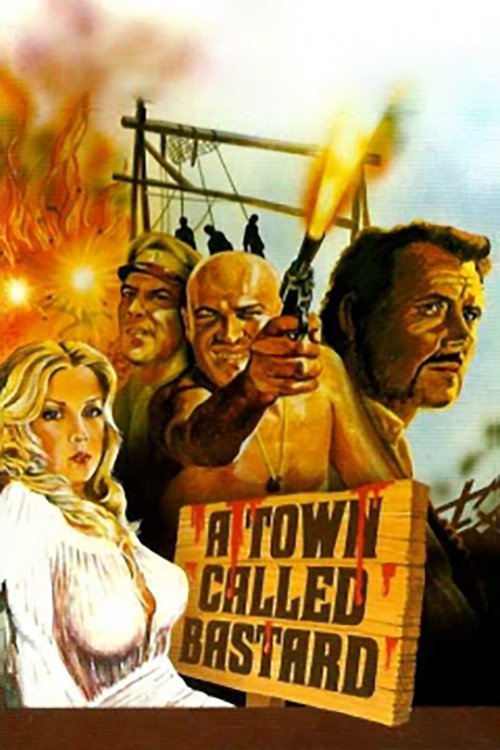 A Town Called Bastard (1971)
 Universal Soldier (1971)
 Dirty Harry (1971)
 See No Evil (1971)
 Freelance (1971)
- More like this film, on a shelf you can walk up to.It's the lit case on the top shelf.