Popeye the Sailor: The 1940s, Volume 3

- Directed by
- Isadore Sparber
- Country
- United States
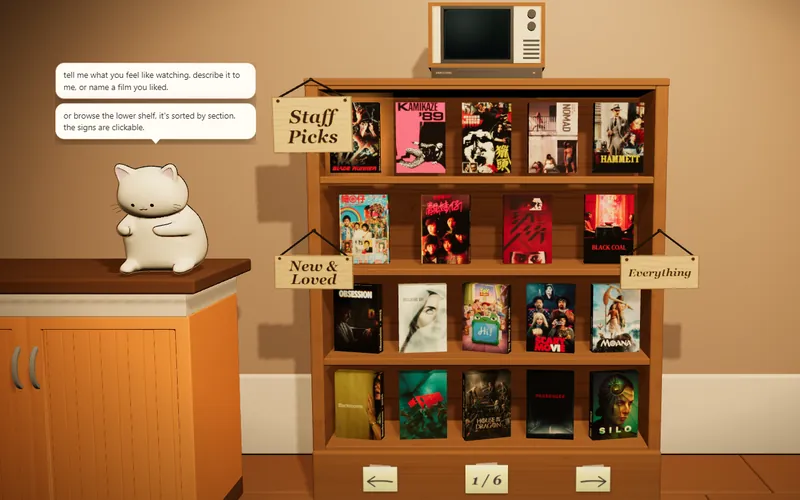
The catalogue in 3D
The film shelves have a room of their own that you can walk around in. The cat behind the counter is the AI Catbot, and they pick real films from the same catalogue when you tell them what you feel like watching. Nothing is for sale, here or in there. Go in from here and this film is already out on the counter, with more like it waiting on the shelf next to it.
How it feels
Popeye gets into fights with Bluto over Olive Oyl. After getting beaten up, he eats spinach to gain strength and wins.
playfulfast-pacedlightheartednostalgiccartoonishwhimsicalsimple
What happens
Popeye the Sailor is an American animated series of short films based on the Popeye comic strip character created by E. C. Segar. In 1933, Max and Dave Fleischer's Fleischer Studios, based in New York City, adapted Segar's characters into a series of theatrical cartoon shorts for Paramount Pictures. The plotlines in the animated cartoons tended to be simpler than those presented in the comic strips, and the characters slightly different. A villain, usually Bluto, makes a move on Popeye's "sweetie", Olive Oyl. The villain clobbers Popeye until he eats spinach, giving him superhuman strength. Thus empowered, Popeye makes short work of the villain. The Fleischer Popeye cartoons proved to be among the most popular of the 1930s, and would remain a staple of Paramount's release schedule for nearly 25 years. Paramount would take control of the studio in 1941 and rename it Famous Studios, ousting the Fleischer brothers and continuing production. The theatrical Popeye cartoons began airing on television in 1956, and the Popeye theatrical series was discontinued in 1957. Popeye the Sailor in all produced 231 short subjects that were broadcast on television for several years. The 1930s Popeye cartoons have been said by historians to have an urban feel, with the Fleischers pioneering an East Coast animation scene that differed highly from their West Coast counterparts. (from Wikipedia, CC BY-SA)
More like this
 Strong to the Finich (1934)
 I Eats My Spinach (1933)
 Dizzy Divers (1935)
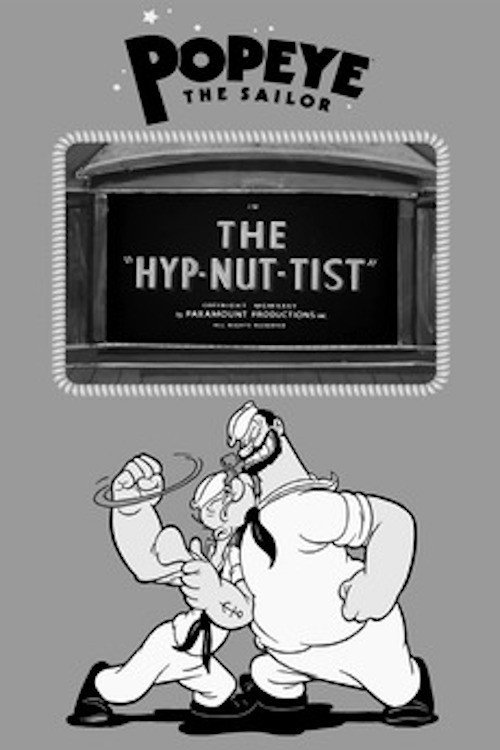 The "Hyp-Nut-Tist" (1935)
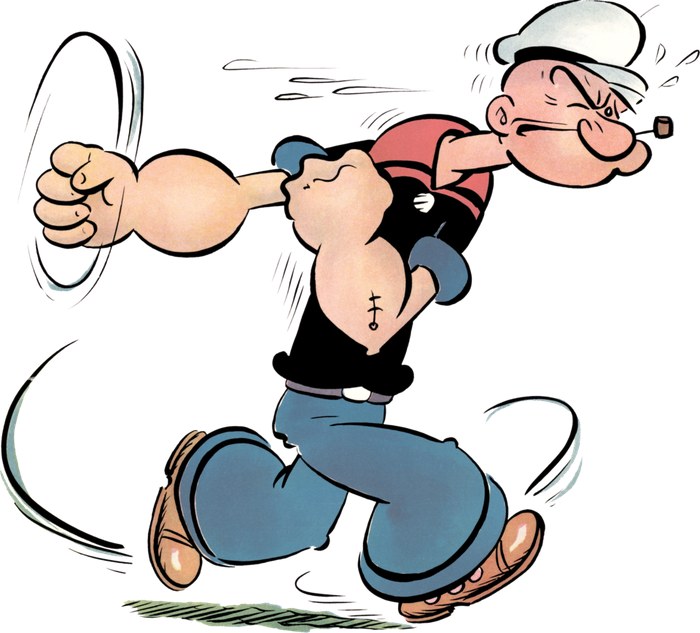 Capt. Jim's Popeye Club
 A Job For A Gob (1955)
 For Better or Worser (1935)
 Let's You and Him Fight (1934)
- More like this film, on a shelf you can walk up to.It's the lit case on the top shelf.