Star Trek III: The Search for Spock (1984)

- Directed by
- Leonard Nimoy
- Genre
- action film, adventure film, science fiction film
- Country
- United States
- Runtime
- 1h 46m
- Rated
- PG
- Rating
- 6.6 of 10 from 1,532 voters
- Elsewhere
- IMDb
The catalogue in 3D
The film shelves have a room of their own that you can walk around in. The cat behind the counter is the AI Catbot, and they pick real films from the same catalogue when you tell them what you feel like watching. Nothing is for sale, here or in there. Go in from here and this film is already out on the counter, with more like it waiting on the shelf next to it.
How it feels
After Spock's death, Admiral Kirk learns that Spock's living spirit was placed in Dr. McCoy's mind. Kirk and his crew steal the decommissioned Enterprise to return Spock's body to his homeworld, facing Klingons who want the Genesis device.
adventurousnostalgicheroicbittersweetearnesthigh-stakesresolutedramatic
What happens
Star Trek III: The Search for Spock is a 1984 American science fiction film, written and produced by Harve Bennett, directed by Leonard Nimoy, and based on the television series Star Trek. It is the third film in the Star Trek franchise and is the second part of a three-film story arc that begins with Star Trek II: The Wrath of Khan (1982) and concludes with Star Trek IV: The Voyage Home (1986). After the death of Spock (Nimoy), the crew of the USS Enterprise return to Earth. When James T. Kirk (William Shatner) learns that Spock's spirit, or katra, is held in the mind of Dr. Leonard "Bones" McCoy (DeForest Kelley), Kirk and company steal the decommissioned USS Enterprise to return Spock's body to his homeworld. The crew must also contend with hostile Klingons, led by Kruge (Christopher Lloyd), who are bent on stealing the secrets of the powerful terraforming device, Genesis. Paramount Pictures commissioned the film after the positive critical and commercial reaction to The Wrath of Khan. Nimoy directed this film, becoming the first Star Trek cast member to do so. Producer Harve Bennett wrote the script, starting from the end and working backwards, and intended the destruction of the Enterprise to be a shocking development. Bennett and Nimoy collaborated with effects house Industrial Light & Magic to develop storyboards and new ship designs; ILM also handled the film's many special effects sequences. Aside from a single day of location shooting, the film was shot entirely on Paramount and ILM soundstages. Composer James Horner returned to expand his themes from the previous film. The Search for Spock opened on June 1, 1984. In its first week of release, the film grossed over $16 million from almost 2,000 theaters across North America. It went on to gross $76 million at the domestic box office, with a total of $87 million worldwide. Critical reaction to The Search for Spock was generally positive, but notably less so than the previous film. Reviewers generally praised the cast, Nimoy's direction, and characters, while criticism tended to focus on the plot; the special effects were conflictingly received. Roger Ebert called the film a compromise between the tones of the first and second Star Trek films. (from Wikipedia, CC BY-SA)
More like this
 Star Trek (2009)
 Star Trek II: The Wrath of Khan (1982)
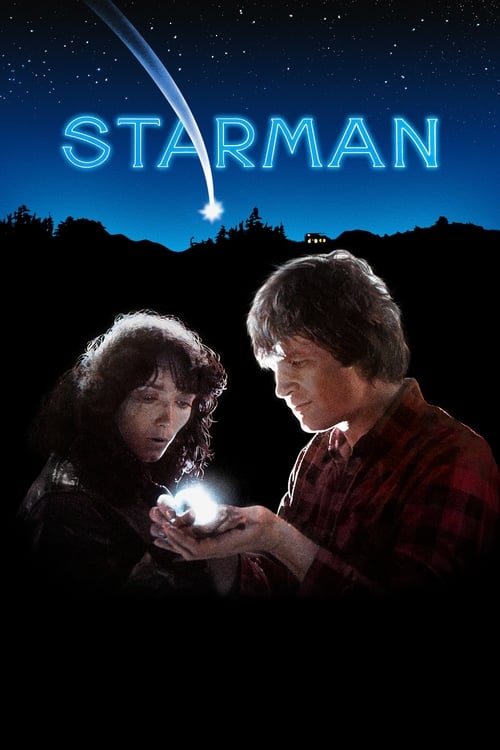 Starman (1984)
 765874 - Unification (2024)
 Star Trek Into Darkness (2013)
 Star Trek Beyond (2016)
 2010: The Year We Make Contact (1984)
 Ghostbusters (1984)
- More like this film, on a shelf you can walk up to.It's the lit case on the top shelf.