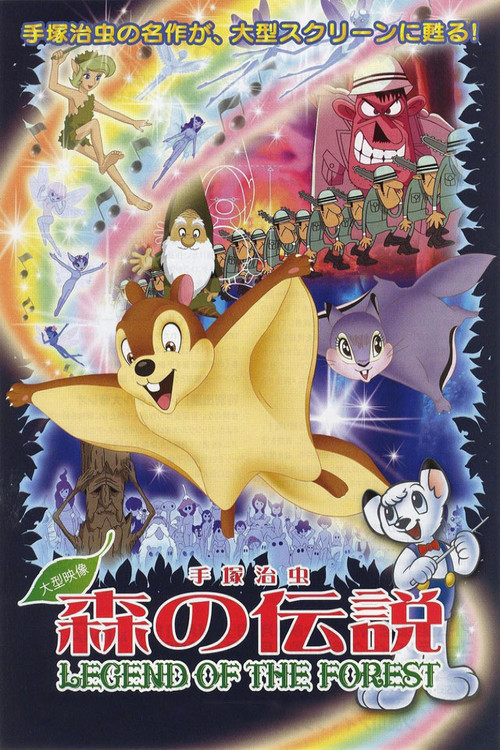
The Legend of the Forest (1987)
- Original title
- 森の伝説
- Directed by
- Osamu Tezuka
- Genre
- anthology film, Adventure, Drama, Fantasy, Music
- Country
- Japan
- Runtime
- 30 min
- Rating
- 6.7 of 10 from 12 voters
- Elsewhere
- IMDb
The catalogue in 3D
The film shelves have a room of their own that you can walk around in. The cat behind the counter is the AI Catbot, and they pick real films from the same catalogue when you tell them what you feel like watching. Nothing is for sale, here or in there. Go in from here and this film is already out on the counter, with more like it waiting on the shelf next to it.
How it feels
This Japanese animated anthology has no dialogue. It follows forest creatures and spirits in four segments set to classical music. The story shows a squirrel fighting a lumberjack, two dragonflies in love, a planned but unfinished raindrop segment, and spirits struggling to save their forest from loggers.
silentdreamlikebleakmeditativewhimsicaltenderurgentachromatic
What happens
Legend of the Forest (森の伝説, Mori no densetsu) is a 1987 Japanese animated film by Osamu Tezuka and his studio, Tezuka Productions. Initially planned in four movements, the film was presented incompletely in 1988, on the occasion of the Asahi Prize ceremony, in the form of a first part comprising the first and fourth movements. The two central segments remained unfinished after Tezuka's death in 1989. Makoto Tezuka, the director's son and part-manager of Tezuka Productions, produced the second movement in 2014 under the title The Legend of the Forest – Part 2. The anime's first movement depicts the struggle between a flying squirrel and a hunter lumberjack. The second, directed by Makoto Tezuka, depicts the love story of two dragonflies as they follow the course of a river through the forest. The third movement, which was never realized, was intended to feature falling raindrops. The fourth and final movement features forest spirits trying to save their environment from the ravages caused by foresters. The film is entirely silent, and each segment is designed to be synchronized with the music of the various movements of Pyotr Ilyich Tchaikovsky's Symphony No. 4. Inspired by the world of Walt Disney, the film is also a tribute to the history of animated cinema, and an artistic pamphlet with an ecological position. (from Wikipedia, CC BY-SA)
More like this
 Tentaifu (1987)
 METAMORPHOSE (2013)
 Three Tales (1960)
 ?/Rhythmic Triangles/Fighting Cards (1932)
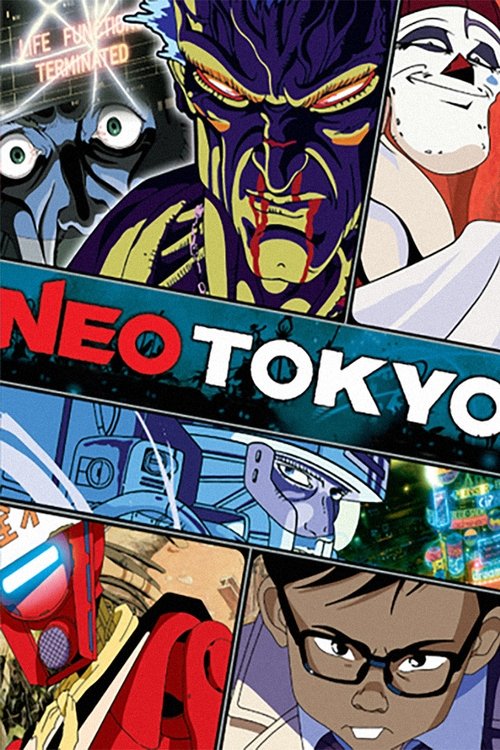 Neo Tokyo (1987)
 Chagama Ondo (1935)
 Omocha-Bako Series, Dai-3-Wa: Ehon 1936-nen (1934)
 FANTASY (2012)
- More like this film, on a shelf you can walk up to.It's the lit case on the top shelf.