To Live (1994)

- Original title
- 活着
- Directed by
- Zhang Yimou
- Genre
- drama film
- Country
- Hong Kong, People's Republic of China
- Runtime
- 2h 12m
- Rated
- U
- Rating
- 8.1 of 10 from 383 voters
- Elsewhere
- IMDb

The catalogue in 3D
The film shelves have a room of their own that you can walk around in. The cat behind the counter is the AI Catbot, and they pick real films from the same catalogue when you tell them what you feel like watching. Nothing is for sale, here or in there. Go in from here and this film is already out on the counter, with more like it waiting on the shelf next to it.
How it feels
Spanning three decades from the 1940s to the 1970s, this drama follows the Xu family as they endure historic upheavals in China. It shows ordinary people losing and finding their footing through war, famine, and political turmoil.
sweepingbittersweetresilientintimatepoignantgroundedtender
What happens
To Live (活着, Huózhe), also known as Lifetimes, is a 1994 Chinese drama directed by Zhang Yimou and adapted from Yu Hua's 1993 novel of the same name. The film spans the 1940s–1970s, tracing the Xu family's survival through the Chinese Civil War, Great Leap Forward, and Cultural Revolution. It won numerous prestigious international awards, and despite domestic censorship, is widely respected for its portrayal of ordinary resilience under political duress. The film looks back on four generations of the Xu family: Xu Fugui, played by Ge You; his father, a wealthy landowner; his wife, Jiazhen, played by Gong Li; their daughter, Fengxia, and son, Youqing; and finally their grandson, Little Bun. The action goes from the Chinese Civil War in the late 1940s to the Cultural Revolution of the 1960s and 1970s. The film, like many examples of fiction and film in the 1970s and 1980s, demonstrates the difficulties of the common Chinese, but ends when conditions are seemingly improving in the 1980s. To Live was screened at the 1994 New York Film Festival before eventually receiving a limited release in the United States on November 18, 1994. The film has been used in the United States as a support to teach Chinese history in colleges. Films like To Live present opportunities for diverse audiences to effectively visualize prominent historical events, and the impact that they had on different demographics of people. To Live offers a straightforward, almost plain, approach to portraying personal perspective within a complicated period of Chinese history. It is this simplicity that makes it an invaluable educational asset in teaching the impacts of this period and the issues of the Great Leap Forward in particular. Having achieved international success with his previous films (Ju Dou and Raise the Red Lantern), director Zhang Yimou's To Live came with high expectations, and lived up to it, receiving critical acclaim. It is the first Chinese film that had its foreign distribution rights pre-sold. Furthermore, To Live brought home the Grand Prix, Prize of the Ecumenical Jury, and Best Actor Award (Ge You) from the 1994 Cannes Film Festival, the highest major international awards Zhang Yimou has ever won. The Film also won the BAFTA Award for Best Film Not in the English Language at the 48th British Academy Film Awards in 1995. The film was denied a theatrical release in mainland China by the Chinese State Administration of Radio, Film, and Television due to its critical portrayal of policies and political campaigns. Zhang Yimou and Gong Li were each banned from filmmaking for two years as a consequence of the film's submission to Cannes without prior official approval, and the ban on the film itself was not lifted until late 2008. (from Wikipedia, CC BY-SA)
More like this
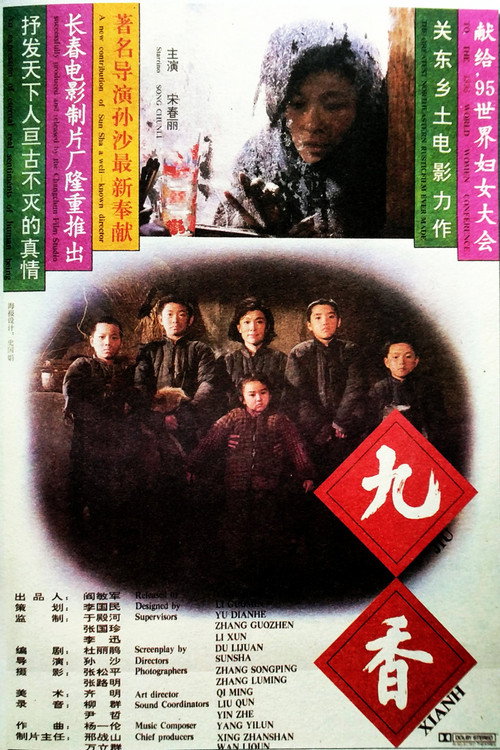 Jiu xiang (1994)
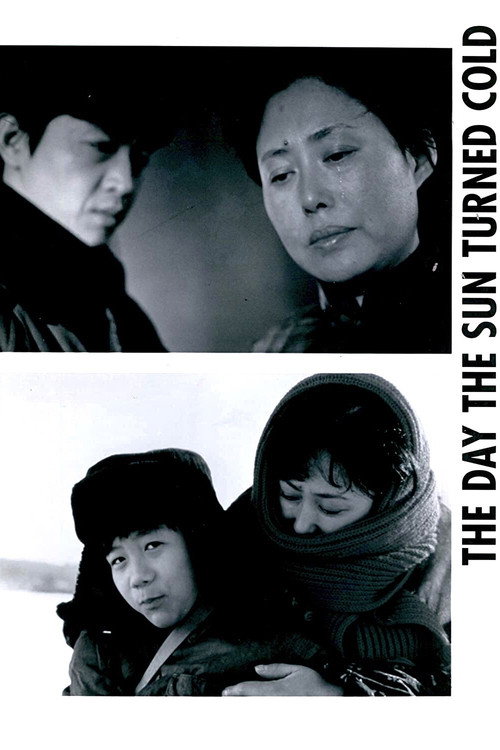 The Day the Sun Turned Cold (1994)
 Back to Roots (1994)
 Sparkling Fox (1994)
 A Single Child's Story (1994)
 The Lovers (1994)
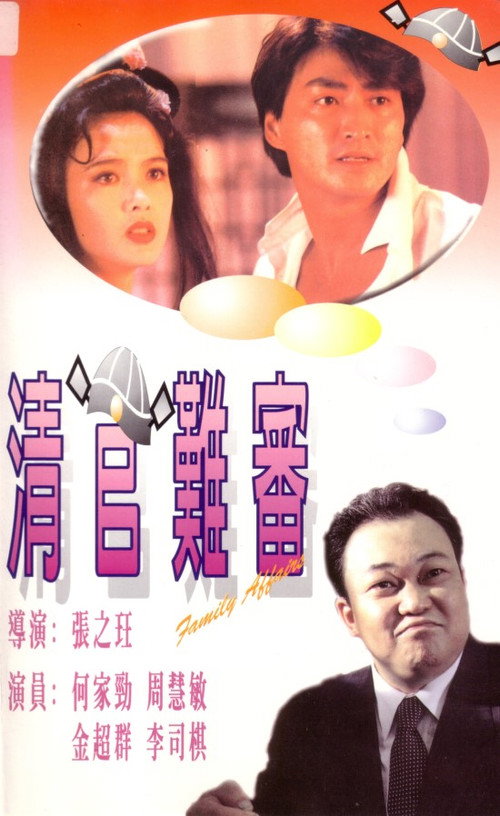 Family Affairs (1994)
 In the Heat of the Sun (1994)
- More like this film, on a shelf you can walk up to.It's the lit case on the top shelf.