Refrigerator Mothers (2003)

- Directed by
- David E. Simpson
- Genre
- documentary film
- Country
- United States
- Runtime
- 1h
- Rating
- 7.5 of 10 from 2 voters
- Elsewhere
- IMDb
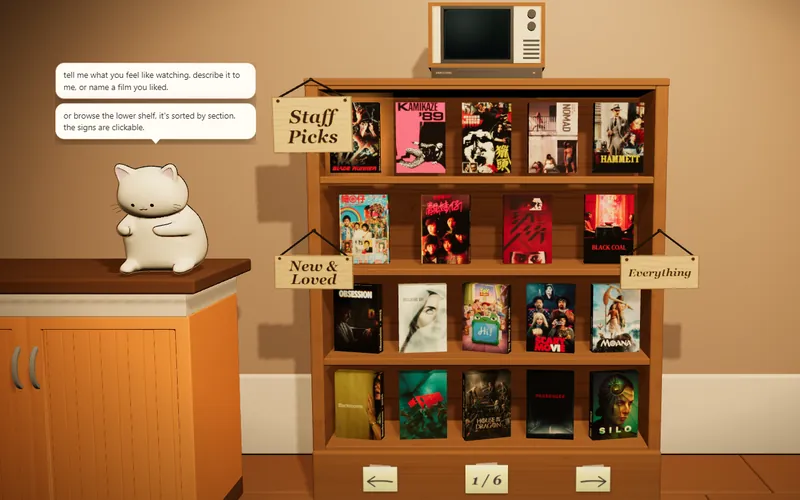
The catalogue in 3D
The film shelves have a room of their own that you can walk around in. The cat behind the counter is the AI Catbot, and they pick real films from the same catalogue when you tell them what you feel like watching. Nothing is for sale, here or in there. Go in from here and this film is already out on the counter, with more like it waiting on the shelf next to it.
How it feels
This documentary interviews mothers who were blamed by doctors for causing their children's autism in the 1950s and 1960s. They share their personal stories of being labeled and their journeys to overcome that stigma.
intimatesoberingpersonalresilienthistoricalreflectivesolemn
What happens
Refrigerator Mothers is a 2003 television documentary film by Kartemquin Films for PBS's P.O.V. series. The film paints an intimate portrait of an entire generation of American mothers whose children were diagnosed with autism. Labeled "refrigerator mothers" in the 1950s and 1960s by the medical establishment for their supposedly frigid and detached mothering, these women "have emerged with strong, resilient voices to share the details of their personal journeys". Refrigerator Mothers was awarded First Prize at the 2002 National Council of Family Relations Media Awards. The film won Best of Show at the 2002 Indiana Film Festival as well as named as an Official Selection to numerous international film festivals. Refrigerator Mothers was featured in a January 2010 issue of Psychology Today that focused on the racial and class stereotyping of autism. (from Wikipedia, CC BY-SA)
More like this
 Autism Every Day (2006)
 My Flesh and Blood (2003)
 Recovered: Journeys Through the Autism Spectrum and Back (2008)
 Hear the Silence (2003)
 Too Sane for This World (2011)
 Autism in Love (2015)
 A Long Way from Nowhere (1970)
 Miracle Run (2004)
- More like this film, on a shelf you can walk up to.It's the lit case on the top shelf.