Shooting Dogs (2005)

- Directed by
- Michael Caton-Jones
- Genre
- drama film
- Country
- Germany, United Kingdom
- Runtime
- 1h 55m
- Rated
- R
- Rating
- 7.5 of 10 from 163 voters
- Elsewhere
- IMDb

The catalogue in 3D
The film shelves have a room of their own that you can walk around in. The cat behind the counter is the AI Catbot, and they pick real films from the same catalogue when you tell them what you feel like watching. Nothing is for sale, here or in there. Go in from here and this film is already out on the counter, with more like it waiting on the shelf next to it.
How it feels
During the 1994 Rwandan genocide, a Catholic priest and an English teacher become trapped at a school compound as Hutu extremists attack the Tutsi refugees inside. The film follows their struggle to survive while UN soldiers stand by, unable to intervene.
harrowingbleaktensesombergroundedvisceraldisturbingsolemnclaustrophobic
What happens
Shooting Dogs, released in the United States as Beyond the Gates, is a 2005 film directed by Michael Caton-Jones and starring John Hurt, Hugh Dancy and Clare-Hope Ashitey. It is based on the experiences of BBC news producer David Belton, who worked in Rwanda during the Rwandan genocide. Belton is the film's co-writer and one of its producers. The setting of the film is the École Technique Officielle (ETO) in Kigali, Rwanda, in 1994, during the Rwandan genocide. Hurt plays a Catholic priest (loosely based on Vjekoslav Ćurić) and Dancy an English teacher, both Europeans, who are caught up in the events of the genocide. Unlike Hotel Rwanda, which was filmed in South Africa using South African actors, the film was shot in the original location of the scenes it portrays. Also, many of the massacre survivors were employed as part of the production crew and in minor acting roles. The film's title refers to the actions of UN soldiers in shooting at the stray dogs that scavenged the bodies of the dead. Since the UN soldiers were not allowed to shoot at the Hutu extremists who had caused the deaths in the first place, the shooting of dogs is symbolic of the madness of the situation that the film attempts to capture. (from Wikipedia, CC BY-SA)
More like this
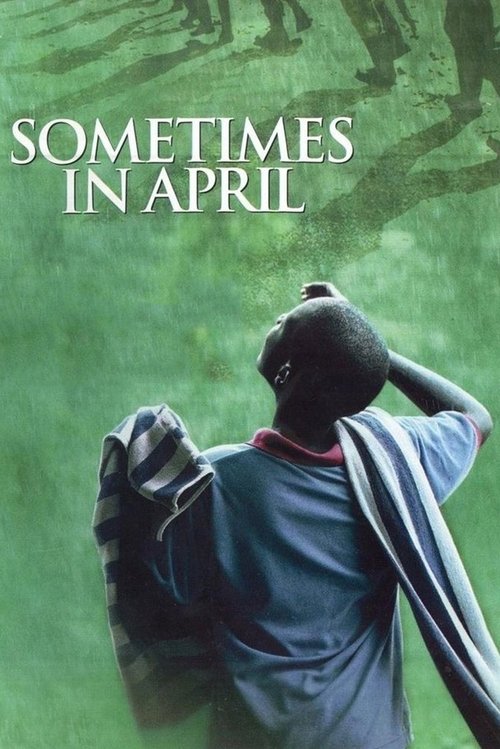 Sometimes in April (2005)
 Hotel Rwanda (2004)
 Ruanda – The Day God Walked Away (2009)
 Bazigaga
 The Day God Walked Away
 Trees of Peace (2021)
 100 Days (2001)
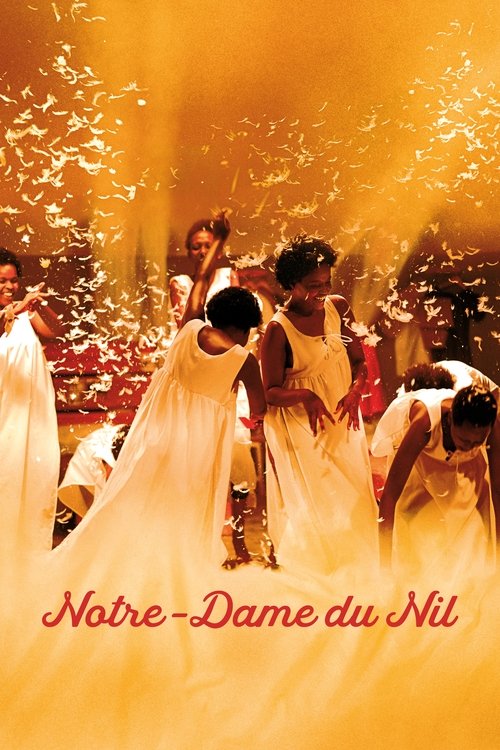 Our Lady of the Nile (2019)
- More like this film, on a shelf you can walk up to.It's the lit case on the top shelf.