Ultra Q (1966)

- Original title
- ウルトラQ
- Genre
- tokusatsu, drama television series, science fiction television series
- Country
- Japan
- Length
- 1 season, 28 episodes
- Rated
- PG
- Rating
- 8.1 of 10 from 22 voters
- Elsewhere
- IMDb

The catalogue in 3D
The film shelves have a room of their own that you can walk around in. The cat behind the counter is the AI Catbot, and they pick real films from the same catalogue when you tell them what you feel like watching. Nothing is for sale, here or in there. Go in from here and this series is already out on the counter, with more like it waiting on the shelf next to it.
How it feels
A team of investigators encounters giant monsters, aliens, and ghosts in standalone episodes. The show mixes science fiction with weird supernatural events.
retrostrangemysteriousmonster-filledlight-heartedepisodicwhimsicaldated
What happens
Ultra Q (ウルトラQ, Urutora Kyū) is a 1966 Japanese tokusatsu kaiju television series created by Eiji Tsuburaya, first broadcast on Tokyo Broadcasting System (TBS) on January 2, 1966 and having its twenty-eighth and final episode aired on December 14, 1967. This series was the first entry in Tsuburaya Productions long-running Ultraman franchise, whose eponymous character would be introduced in the following and more popular series, Ultraman (1966). Ultra Q can be described as a half-hour Toho kaiju series. Executive producer Eiji Tsuburaya intended this series to be more like the American television series The Twilight Zone and The Outer Limits, featuring a variety of strange and unusual stories. After a survey, the TBS network convinced Tsuburaya Productions to add more giant monsters, as children were intensely interested in them, since Gojira and Gamera were sensational characters during the period. Some commentators have described a "Kaiju Boom" which began after Ultra Q's success. Much like The X-Files, the series features continuing characters who investigate strange supernatural phenomena, including giant monsters, aliens, ghosts, and various other threats. The originally planned title of this project was Unbalance, and was subsequently renamed Ultra Q mostly due to the word "Ultra" gaining popularity due to the Japanese gymnast Gold Medal recipient in the 1964 Summer Olympics using a technique named "Ultra C". The "Q" stands for "Question" and is also tied with another hit TBS series, Obake no Q-tarō, an animated series based on the manga by Fujiko Fujio. The series began production in 1964, with the premiere set for January 1966. At the time, this was the most expensive television series ever produced in Japan. (from Wikipedia, CC BY-SA)
More like this
 Ultraman (1966)
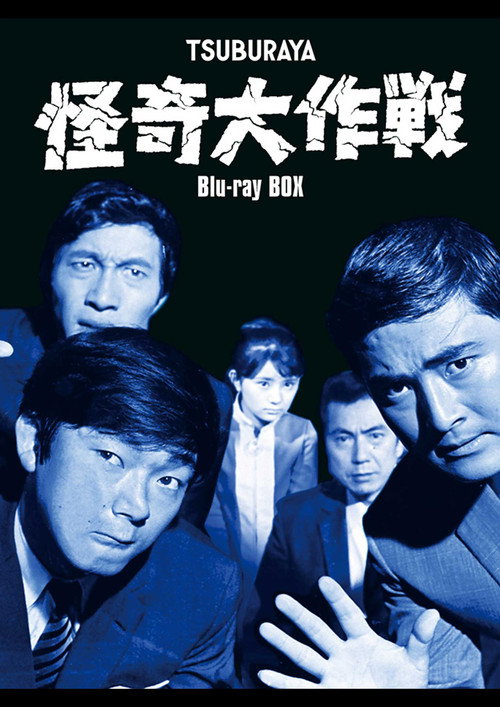 Kaiki Daisakusen (1968)
 Captain Ultra (1967)
 Ultraseven (1967)
 Kaiju ouji (1967)
 The Time Tunnel (1966)
 Raumpatrouille (1966)
 Ultraman Tiga (1996)
- More like this series, on a shelf you can walk up to.It's the lit case on the top shelf.