New Zealand Theatre
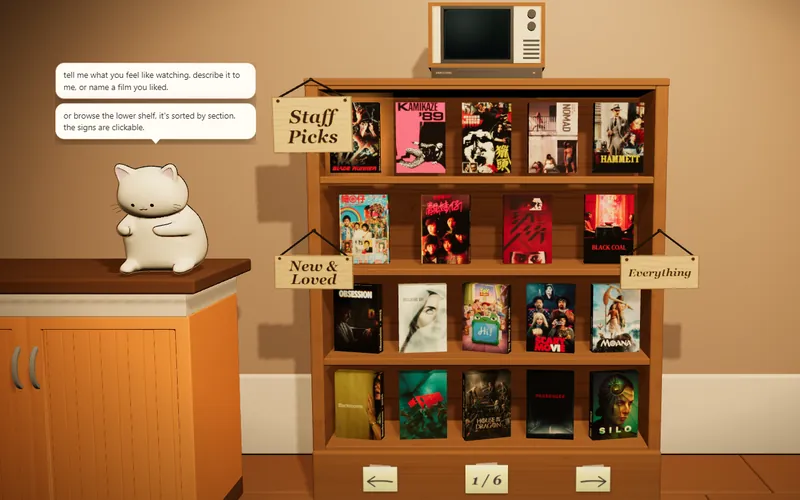
The catalogue in 3D
The film shelves have a room of their own that you can walk around in. The cat behind the counter is the AI Catbot, and they pick real films from the same catalogue when you tell them what you feel like watching. Nothing is for sale, here or in there. Go in from here and this series is already out on the counter, with more like it waiting on the shelf next to it.
How it feels
This is a New Zealand anthology series from 1997. Seven hour long films were produced from over 170 scripts. Each episode tells a different local story by a different writer and director. The first episode is about an advertising man who buys a rural pub. The second episode is about family drama at a christening. Reactions to the first episode were mixed, with one critic saying it used empty cliches. A critic called the second episode a stunning dysfunctional family drama.
low-keyunderstateddramaticlocaltelevisualstoriedanthologicalrestrained
What happens
New Zealand Theatre is a 1997 New Zealand anthology television series showing a series of locally produced hour long films. It aired on Sunday nights on TV 1 beginning 5 October. It featured New Zealand stories told by different writers and directors. It began production as part of the series of Montana Sunday Theatre series which had shown international stories. 171 scripts were submitted from which 11 were shortlisted which was whittled down to 7 episodes being produced. The series started with Highwater where an advertising executive, Michael Hurst as Hugh Chance, is in a rural town to film a commercial and decides to by the local pub. Phil Wakefield in the Evening Post says it's "elements never coalesce as they should and the whole falls short of its considerable parts." The Southland Times' Michael Farrow wrote "I have to say I enjoyed it. That's an admission, because the programme relied on all manner of empty cliches." The second episode was Home Movie where family drama comes out when friends and family join for a christening. Phil Wakefield in the Evening Post calls it "a stunning dysfunctional family drama" and says "The cast is excellent, the juxtaposition of scenes telling and the locale keenly Kiwi and atmospheric." Coalface stars Lee Grant as Mumps, a brothel madam. Her brothel is threatened by a local gang, her criminal son arrives and her sister is attacked, spurring her into action. Grant injured herself during production and had to have a hip replacement. One of Them is set in the 1960s where two schoolboys coping with teenage life are also coming to terms with them both being gay. Both boys are played by 14 year olds in their acting debut. Nga Wahine is an aptation of Riwia Brown's play of the same name and sees the plays lead actress, Nancy Brunning, repising her role. She plays Daina who get pregnant and is abandonded by her partner. House of Sticks sees a mother who leaves her abusive husband, taken her two children. When she searches for a new man the daughter is left to care for the sonand she self-destructs. It looks at child abuse, bulimia, and their effects on a family. In Share the Dream Bosco and Selena work on an assembly line where they fall in love amidst an industrial dispute. The fim also features an appearance from Jock Barnes who took part in the 1951 waterfont dispute. The Southland Times' Michael Farrow took exception to a sex scene in the film and wrote it "was of considerable prurient interest and absolutely no importance. It intruded, in the most distracting way, into what was an important piece of social drama. Here was a story that deserved to help focus debate about the difficult relationships among workers and employers in modern New Zealand." (from Wikipedia, CC BY-SA)
More like this
- Winners & Losers
 About Face
 Loose Enz
 Late Night Theatre (1972)
 ABC Theater
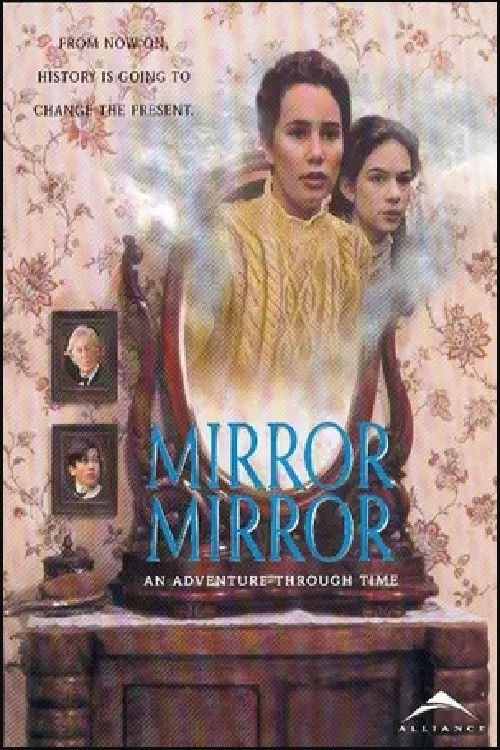 Mirror, Mirror (1995)
 ScreenPlay Firsts (1987)
 Saturday Playhouse (1958)
- More like this series, on a shelf you can walk up to.It's the lit case on the top shelf.