The Cabinet of Dr. Caligari (1920)

- Original title
- Das Cabinet des Dr. Caligari
- Directed by
- Robert Wiene
- Genre
- fantasy film, horror film, silent film, crime film, experimental film, gothic film
- Country
- Germany
- Runtime
- 1h 17m
- Rated
- NR
- Rating
- 7.9 of 10 from 1,787 voters
- Elsewhere
- IMDb

The catalogue in 3D
The film shelves have a room of their own that you can walk around in. The cat behind the counter is the AI Catbot, and they pick real films from the same catalogue when you tell them what you feel like watching. Nothing is for sale, here or in there. Go in from here and this film is already out on the counter, with more like it waiting on the shelf next to it.
How it feels
A hypnotist named Dr. Caligari uses a sleepwalking man called Cesare to carry out murders. The film has a distorted, angular visual style that creates a sense of unease.
darktwistedanxiousunnervingsurrealclaustrophobicmelancholiceerie
What happens
The Cabinet of Dr. Caligari (German: Das Cabinet des Dr. Caligari) is a 1920 German silent horror film directed by Robert Wiene and written by Hans Janowitz and Carl Mayer. The quintessential work of early German Expressionist cinema, it tells the story of a hypnotist (Werner Krauss) who uses a somnambulist Cesare (Conrad Veidt) to commit murders. The film features a dark, twisted visual style, with sharp-pointed forms; oblique, curving lines; structures and landscapes that lean and twist in unusual angles; and shadows and streaks of light painted directly onto the sets. The set design is "anti-realistic, claustrophobic" and "harsh" which is "coupled with feverish anxiety [that] entered the vocabulary of filmmakers and film viewers" particularly during the Weimar Republic, when this film was made. The script was inspired by various experiences from the lives of Janowitz and Mayer, both pacifists who were left distrustful of authority after their experiences with the military during World War I. The film makes use of a frame story, with a prologue and epilogue combined with a twist ending. Janowitz said this device was forced upon the writers against their will. The film's design was handled by Hermann Warm, Walter Reimann and Walter Röhrig, who recommended a fantastic, graphic style over a naturalistic one. The film thematises brutal and irrational authority. Writers and scholars have argued the film reflects a subconscious need in German society for a tyrant, and is an example of Germany's obedience to authority and unwillingness to rebel against deranged authority. Some critics have interpreted Caligari as representing the German war government, with Cesare symbolic of the common man conditioned, like soldiers, to kill. Other themes of the film include the destabilised contrast between insanity and sanity, the subjective perception of reality, and the duality of human nature. The Cabinet of Dr. Caligari was released when foreign film industries were easing restrictions on the import of German films after World War I, so it was screened internationally. Accounts differ as to its financial and critical success upon release, but modern film critics and historians have largely praised it as a revolutionary film. The film was voted number 12 on the prestigious Brussels 12 list at the 1958 World Expo. Critic Roger Ebert called it arguably "the first true horror film", and reviewer Danny Peary called it cinema's first cult film and a precursor for arthouse films. The film helped draw worldwide attention to the artistic merit of German cinema, and had a major influence on American films, particularly in the genres of horror and film noir. (from Wikipedia, CC BY-SA)
More like this
 The Count of Cagliostro (1920)
 Il caso Valdemar (1936)
 Dr. Mabuse the Gambler (1922)
 Figures of the Night (1920)
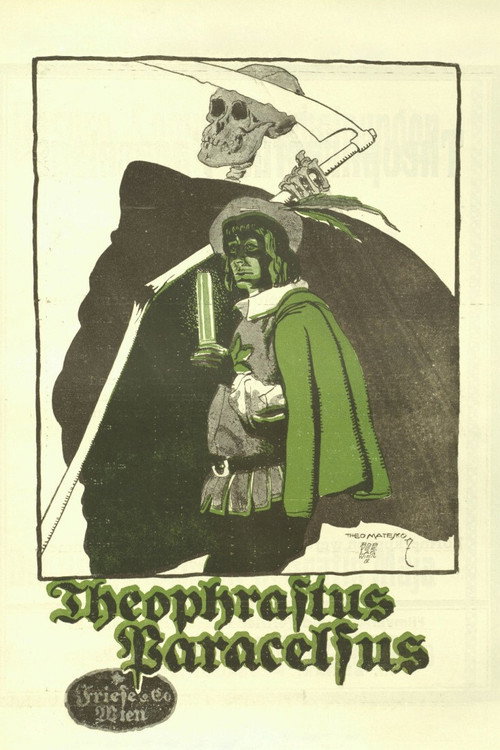 Theophrastus Paracelsus (1916)
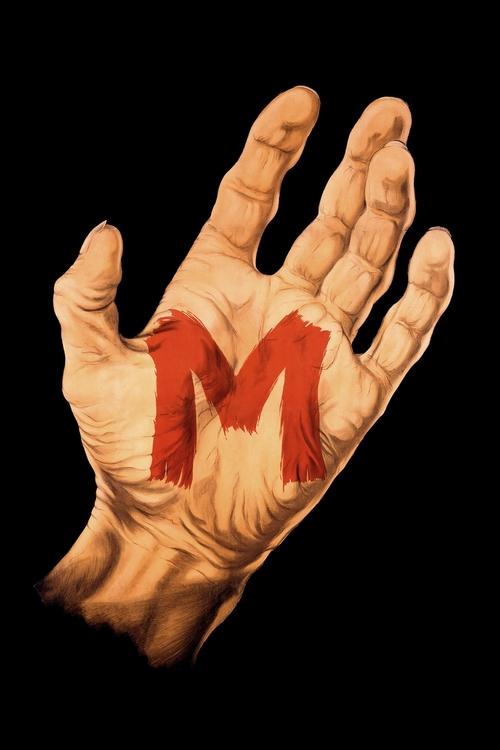 M (1931)
 The Hunchback and the Dancer (1920)
 The Testament of Dr. Mabuse (1933)
- More like this film, on a shelf you can walk up to.It's the lit case on the top shelf.